
Sumner County Criminal Case Files
Criminal court records in Sumner County are produced by the District Court when a prosecutor files a criminal case. The Sumner County District Court is the local Kansas trial court at 501 N Washington, Wellington, KS 67152. It handles felony criminal cases, qualifying misdemeanors, traffic matters filed in district court, juvenile matters where public access is allowed, and the public courthouse terminal for district-court records. The Clerk of the District Court keeps the case file, docket, and certified-copy process for these criminal court records.
Municipal court records are separate. Wellington Municipal Court handles city ordinance violations and many city traffic citations at its own court location and payment office. A municipal warrant or city citation may affect a person, but the full Sumner County criminal court record for felony prosecution belongs in District Court after law enforcement refers the case and the Sumner County Attorney files charges.
The Kansas criminal-history record check page is one official statewide source that helps distinguish a repository background check from a Sumner County criminal court file.
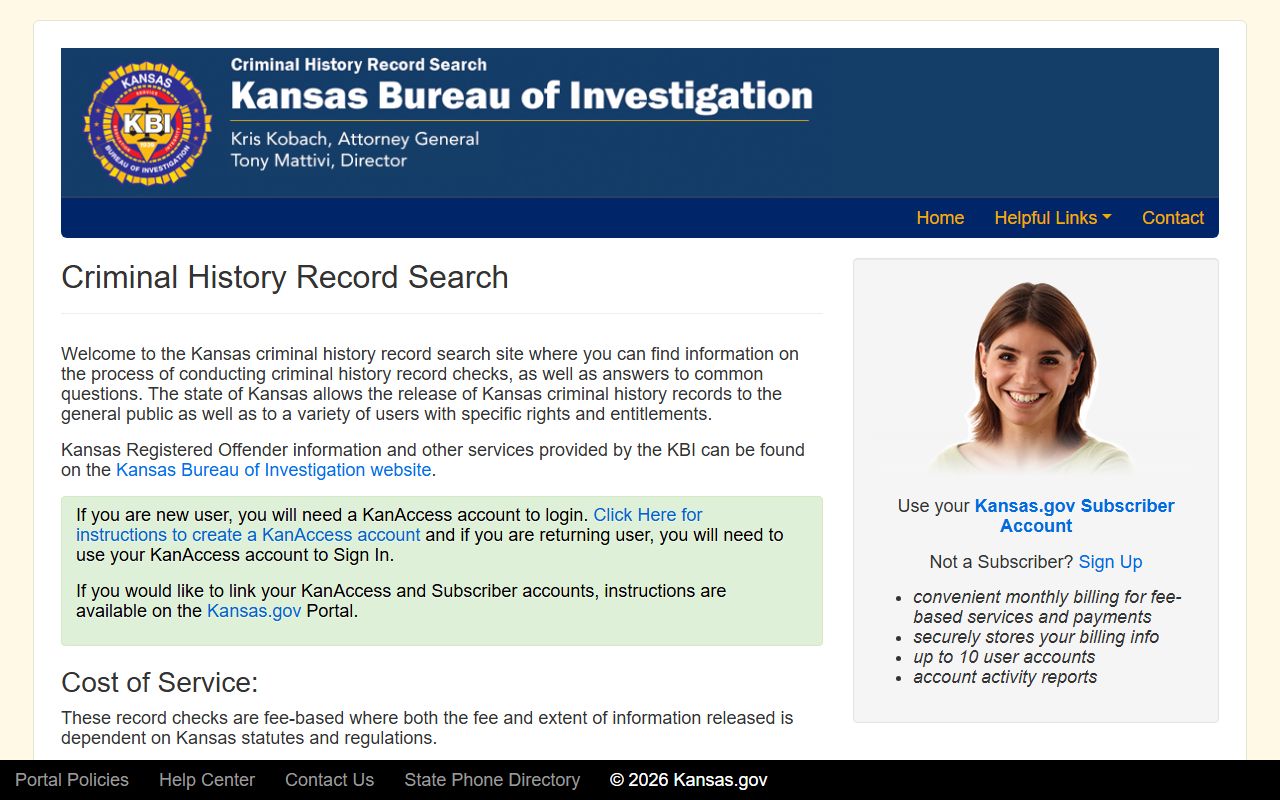
The court file explains what happened in the case, while the KBI repository search is a separate criminal-history channel.
Search Sumner County Criminal Records
Start with Kansas Case Search, the statewide public district-court case search. Sumner County does not publish a separate district-court criminal case portal on the county website. Kansas Case Search can be searched by case number, party name, business name, citation, attorney information, or other criteria allowed for the user's role. Some records show public case information only; document access depends on Kansas Supreme Court Rule 22 and the age and filing status of the document.
- Open Kansas Case Search and choose the search type that matches the known information.
- Use a case number when available. Name searches should be cross-checked against lawful identifying details shown by the system.
- Filter by case type or case status if too many Sumner County criminal records appear.
- Open the case detail and read the docket events, charges, hearings, disposition, sentence, and financial entries.
- If the needed record is not online, use the courthouse terminal or contact the Clerk of the District Court.
The courthouse terminal matters because Rule 22 does not make every public court document available on the internet. Kansas court guidance says each court has a public computer for searches of court cases and records in that court. A certified copy, a document not visible online, or an older record may require a written clerk request rather than a portal search.
If the case began as a city matter, check the source before assuming the District Court has every entry. Wellington Municipal Court keeps its own city ordinance and many city traffic records, while sheriff and Kansas Highway Patrol citations may route through other Kansas payment or court channels. A Sumner County criminal court search is strongest when the case number, charge label, and court location all match.
Sumner County Criminal Case Flow
A criminal court record grows as the case moves. The first entries may show a complaint or information, a warrant or summons, bond, an arraignment, and attorney appearances. Later entries may show pretrial motions, amended charges, plea settings, trial settings, verdicts, sentencing, probation, restitution, costs, or postrelease supervision. The County Attorney's office at the courthouse prosecutes crimes referred by law enforcement and also lists criminal diversion and discovery policy materials on its official county page.
Case flow: Charges Filed › Arraignment › Pretrial or Motions › Plea or Trial › Disposition › Sentencing
| Stage | What the Sumner County record may show |
|---|---|
| Charges filed | Complaint or information, case number, charge counts, statute references, bond, and defendant name. |
| Arraignment | First formal court setting where charges and plea issues are addressed. |
| Pretrial | Motions, continuances, discovery, amended charges, diversion activity, or plea negotiations. |
| Plea or trial | Guilty plea, not-guilty plea, trial event, verdict, dismissal, or acquittal. |
| Sentencing | Jail, prison, probation, postrelease supervision, restitution, costs, fines, or bond-related entries. |
What Sumner Criminal Records Show
Kansas court guidance separates case information from court records. Case information usually includes the case number, type, parties, attorneys, assigned judge, hearing dates, docket events, and status. Court records are the filed documents, such as pleadings, orders, and judgments. In a Sumner County criminal court record, the docket often gives the quickest view of what happened, while the filed documents give the formal legal text when those documents are public and available.
| Field | What it shows |
|---|---|
| Case number | The unique District Court identifier, often needed for clerk requests and courthouse terminal searches. |
| Defendant and attorneys | The charged person, counsel, prosecutor appearances, and sometimes appointment or withdrawal events. |
| Charges | Counts filed by the prosecutor, statute references, severity when shown, and later amendments. |
| Docket events | Hearings, motions, continuances, warrants, bond activity, orders, and scheduled settings. |
| Disposition | Outcome for each charge, such as guilty plea, dismissal, acquittal, or other final action. |
| Sentence and money | Probation, jail, prison, postrelease, restitution, fines, costs, bond, or financial-detail entries. |
The KBI registered-offender registry is a different public tool and should not be read as the same thing as a Sumner County criminal case file.
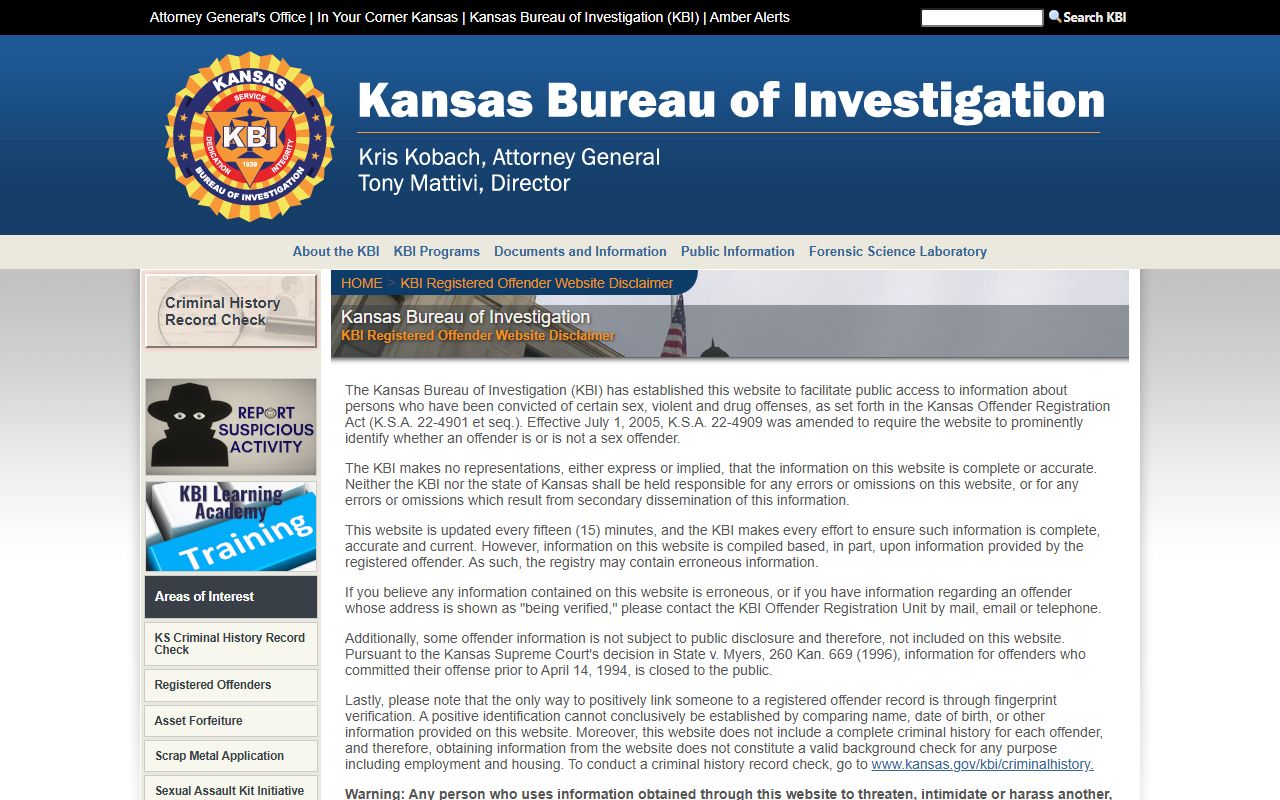
Registry data, court case data, jail booking records, and criminal-history repository data each answer a different record question.
Sumner Charges vs Convictions
A charge is an accusation in a court case. A conviction is an outcome after a guilty plea, guilty verdict, or similar final disposition. Sumner County criminal court records may show charges that were later amended, reduced, dismissed, or resolved through diversion. For the narrower arrest-to-charge path, use the Sumner County arrest records and court charges page. For the full case file, the criminal court record is the better source.
Diversion can also affect how a record reads. The County Attorney page links diversion policy materials, and the research notes separate traffic and criminal diversion applications. A docket may show the filing and later case activity without meaning every original count became a conviction. Read each count, not just the case caption.
| Point | Charge | Conviction |
|---|---|---|
| Record meaning | A prosecutor alleges a crime or violation. | The court records a guilty outcome or verdict. |
| Where it appears | Complaint, information, docket, jail roster, or warrant list. | Disposition, judgment, sentencing, and financial entries. |
| Risk of misread | May be pending, amended, or dismissed. | Still needs the exact sentence and charge count checked. |
Public Access to Sumner Records
Kansas public access to criminal court records is shaped by both KORA and court rules. K.S.A. 45-216 and 45-218 state the public policy of open records and require agencies to allow inspection unless another law closes the record. K.S.A. 45-221 lists records that are not required to be disclosed and requires separation of open and closed information. For electronic district and appellate court records, Kansas Supreme Court Rule 22 controls what can be viewed online.
Access point: Court case records go through Kansas Case Search, the courthouse terminal, or the Clerk of the District Court, while county administrative records use the Sumner County KORA process.
K.S.A. 38-2309 limits access to juvenile court records in many situations.
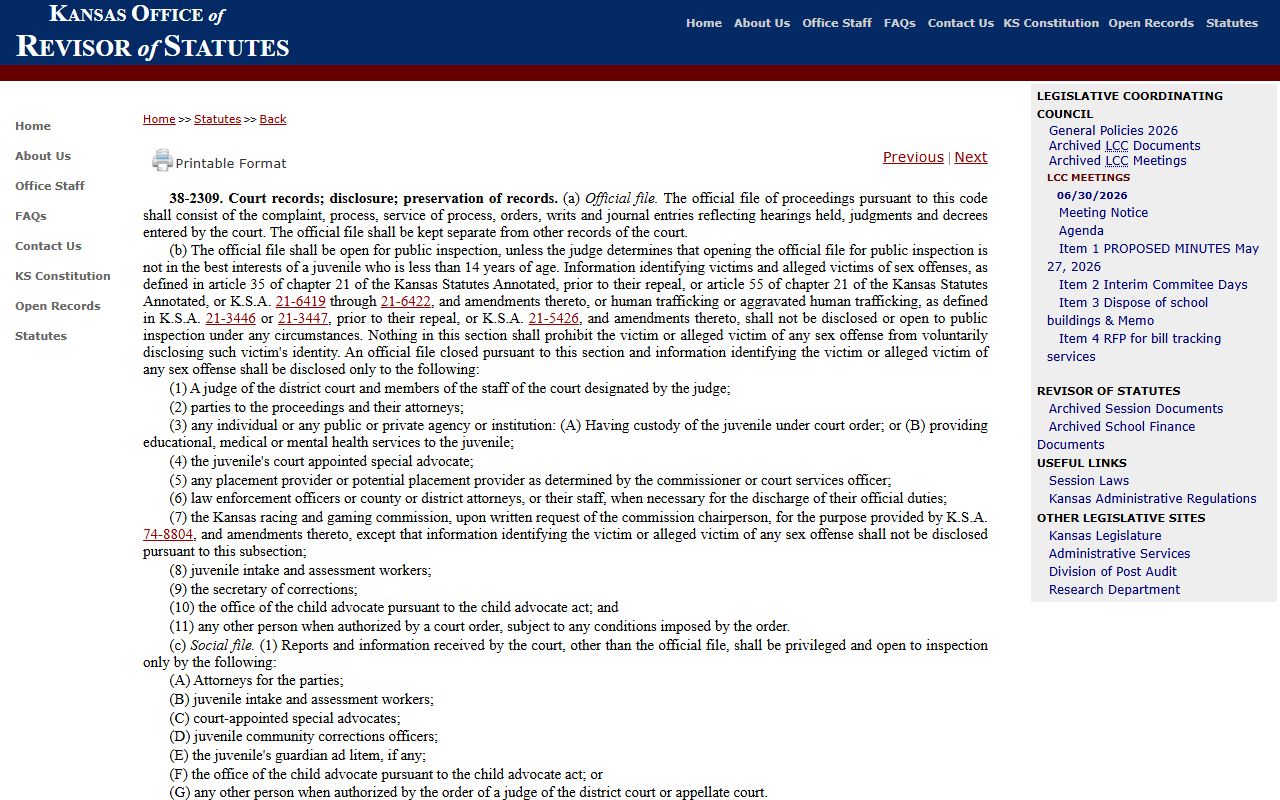
Juvenile restrictions are one reason a name search may not show the same detail for every criminal or quasi-criminal matter.
Sealed and Expunged Records
Sealed and expunged criminal court records are not available through ordinary public lookup. Kansas expungement limits public access after the proper petition or motion is granted, but the court file is not always destroyed in a plain physical sense. Access is restricted. A person trying to confirm a Sumner County case for expungement usually needs the case number, the court that handled it, and any available docket history before using Kansas Judicial Council or Kansas Self-Help materials.
| Point | Sealed | Expunged |
|---|---|---|
| Public view | Hidden from public lookup by rule, law, or order. | Public-facing access is limited after court approval. |
| Where checked | Court clerk or court order, not a public portal. | The court that handled the case and any required petition. |
| Common limit | May still be available to specified justice users. | Eligibility and waiting period must be checked by case type. |
K.S.A. 38-2310 also restricts many juvenile law-enforcement and municipal-court records.
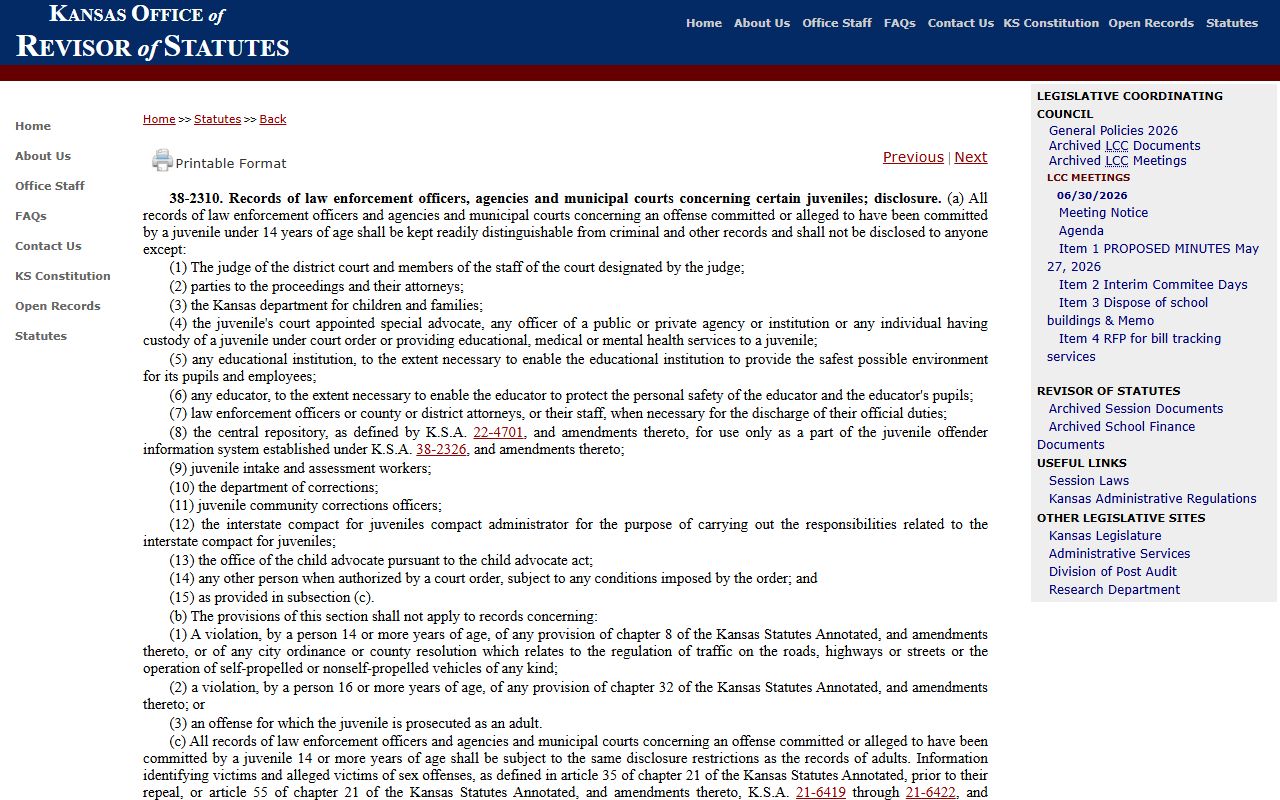
That statute is especially important when an event began with law enforcement but does not become a fully public adult District Court case.
Note: A missing online result does not prove no case exists, because courthouse terminal access and clerk review may differ.
Restricted Sumner Criminal Records
Some Sumner County criminal court records and related law-enforcement materials are restricted or redacted. Juvenile records, expunged records, sealed cases, adoption records, mental health or care-and-treatment materials, medical information, Social Security numbers, account numbers, and protected attorney-client or evidence-rule material may be withheld. The Sumner County KORA overview also explains that the county does not have to create a record, perform special research, or interpret data for a requester.
The KBI criminal-history check costs $30 and is separate from a docket search. It may be useful for repository-level background history, but it is not a substitute for reading the court file, especially when charges were amended or dismissed. FCRA-regulated decisions require legally compliant consumer-reporting channels, not casual public-record review.
For records tied to jail custody or warrants, use the matching official source as a cross-check. The sheriff's jail roster can explain current custody and bond, while the active warrant list can explain an FTA or probation-violation entry. Neither source replaces the District Court docket when the question is the court outcome.
Public Record Search
Sponsored Results